Supreme Court Blocks OSHA "Vaccine-Or-Test" Rule for U.S. Workers
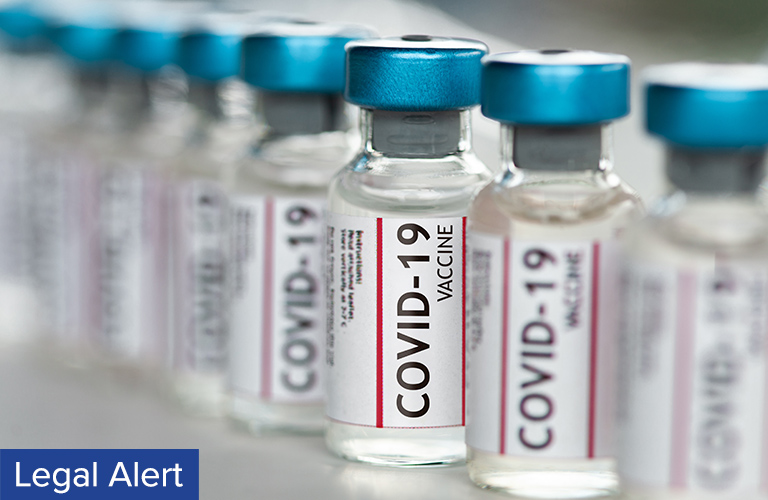
On Thursday, January 13, 2022, a divided U.S. Supreme Court blocked the Biden administration's workplace vaccine-or-test rule, declaring that the Occupational Safety and Health Administration had exceeded its authority. (The Court let stand a separate vaccine mandate for people working in health care facilities that receive federal funding.) While the Court agreed that COVID-19 represents a grave danger to society, it disagreed that Congress had given OSHA the power to regulate threats to public health by imposing vaccination requirements on the U.S. workforce.
The rule, which was published November 5th, went into effect earlier this week, would have applied to some 84 million private sector employees and would have required all businesses with 100 or more workers to ensure that their employees either be vaccinated, with the federal government footing the bill, or be tested weekly and required to wear face masks in the workplace. In addition, the rule required covered employers to adopt a written COVID-19 vaccination policy and to verify and maintain proof of the vaccination status of each employee. Fatal to the rule was the fact that OSHA had not shown that the threat of COVID-19 was any greater in the workplace than to society in general. As noted by the majority in the unsigned opinion: "Although Congress has indisputably given OSHA the power to regulate occupational dangers, it has not given that agency the power to regulate public health more broadly," and "[r]equiring the vaccination of 84 million Americans, selected simply because they work for employers with more than 100 employees, certainly falls in the latter category."
The ruling is being hailed as a victory for the 26 business groups, led by the National Federation of Independent Businesses, and 27 Republican-led states, who challenged the OSHA rule not only based on agency overreach but also on the excessive burden of compliance on employers already struggling to deal with a strained labor force.
In the same opinion, however, the Court recognized that OSHA does have authority to "regulate occupation-specific risks related to COVID-19. Where the virus poses a special danger because of the particular features of an employee's job or workplace, targeted regulations are plainly permissible." OSHA, therefore, can still develop more targeted rules for specific workplaces such as meat packing plants where workers cannot socially distance. While the OSHA rule has been halted, employers still need to remain apprised of any mandates or other workplace requirements imposed at the state or local level.
Related Professionals




Media Contact
Public Relations Contact
Kate Lenders
Senior Marketing Manager
klenders@sgrlaw.com
312-360-6478
