
Oct 24, 2018

Increased Regulation Coming for Coal Ash

Coal Ash

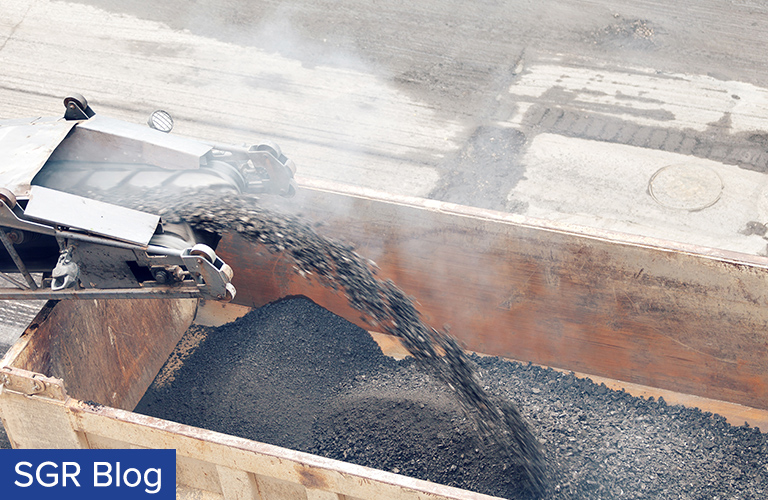
The decision of the U.S. Court of Appeals for the District of Columbia Circuit on August 21 in Utility Solid Waste Activities Group (USWAG), et al v. EPA, No. 15-1219, likely will lead to more stringent regulation of coal ash disposal at both active and inactive power plants.  In a per curiam opinion, the D.C. Circuit agreed with challenges asserted by environmental plaintiffs that the Obama-era coal ash rule did not establish stringent enough controls on coal ash disposal and management.  The Court ruled that EPA’s failure to require protective measures for coal ash disposal sites without composite liners, and… Read more

Oct 17, 2018

First Vapor Intrusion Superfund – Sites Listed by EPA

Hazard Ranking System for Contaminated Sites

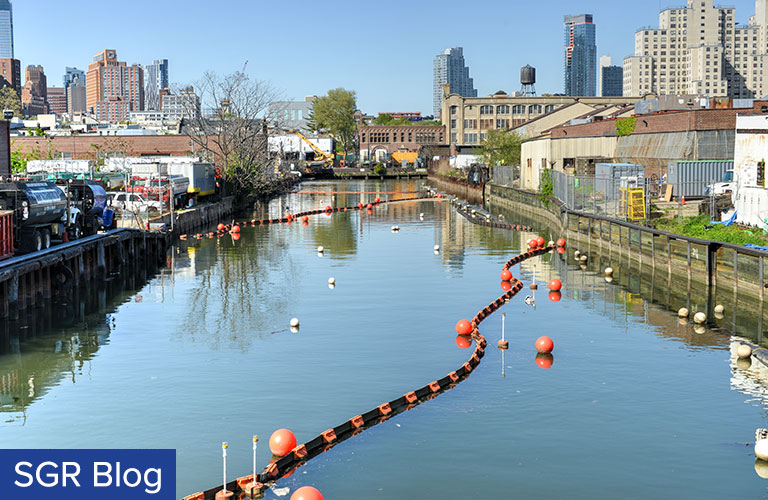
In 2017, EPA finalized a rule that updated its Hazard Ranking System (HRS), used to determine when to add contaminated sites to the National Priorities List (NPL), to allow ranking of sites based on subsurface intrusion, including both vapor and water seepage from underground contamination.  EPA has now added the first two sites to the NPL based on vapor intrusion alone—on September 11, EPA finalized listing of the Rockwell International Wheel & Trim site in Grenada, Mississippi, and the Delfasco Forge site in Grand Prairie, Texas on the NPL.  The Rockwell site was listed because of vapors of trichloroethylene (TCE)… Read more


Oct 10, 2018

Congress Approves America’s Drinking Water Infrastructure Act

Drinking Water

On September 13, 2018, the U.S. House of Representatives unanimously approved the America’s Water Infrastructure Act.  The legislation has bipartisan support in the Senate and is expected to be approved. When approved, the Act will increase funding allocated for EPA’s Drinking Water State Revolving Fund, which provides financial support to state drinking water systems.  The proposed legislation expands the class of chemicals that public water supplies must monitor for, and requires monitoring for systems serving more than 3,300 people.  The threshold under the existing act is for systems serving more than 10,000 people.  The new monitoring requirements are expected to… Read more


Oct 3, 2018

EPA Seeks to Revamp NSR Test

EPA pollution control

The EPA has proposed easing the emission test for triggering new source review (“NSR”) requirements for installation of modern pollution controls as part of its power sector climate rule. The proposal is contained in the August 21st “Affordable Clean Energy” (“ACE”) which would replace the Obama-Era Clean Power Plan.  Under the existing NSR program, facilities undergoing major modifications that increase actual emissions are required to install state-of-the-art pollution controls.  Opponents of the NSR rules cite it as a deterrent to making modifications and modernizing aging coal-fired plants.  To resolve this issue, the new rule would ease the emission testing requirements… Read more


Sep 19, 2018

EPA Proposes Changes to Regulations on Methane Emissions

Methane Emissions

On September 11, the EPA proposed changes to an Obama-era rule on methane emissions to give oil and gas companies more time between inspections of drilling equipment and to repair methane gas leaks. Industry groups opposed the 2016 rule, which required energy companies to conduct leak inspections on their drilling equipment as regularly as every six months, as being overly burdensome. Under the EPA’s new proposal, energy companies would perform leak inspections at least once a year, in most cases, and every two years for low-producing oil and gas wells. Oil and gas drillers are currently required to fix methane… Read more


Sep 5, 2018

Trump Administration Continues to Ease Regulations on Coal Plants

Coal Plant Emissions

On Wednesday, August 29th, the U.S. Environmental Protection Agency said it was reconsidering an Obama-era rule on emissions of mercury from coal-fired plants. The 2011 Mercury and Air Toxics Standards (“MATS”) rule requires certain power plants to reduce mercury emissions. 81 Fed. Reg. 20172 (April 6, 2016). According to the U.S. EPA, “[i]n 2000, after years of study, EPA issued a scientific and legal determination that it was ‘appropriate and necessary’ to control mercury emissions from power plants.” Click here to read the full article. (last visited 9/4/2018). MATS is viewed as accelerating the shut-down of coal-fired power plants. Other factors… Read more


Aug 22, 2018

“Exceptional Events” Exemption Under the Clean Air Act Upheld by D.C. Circuit

Clean Air Act and Man Made Pollution

EPA’s “exceptional events” rule allows air pollution caused by “exceptional events” to be discounted by States in determining their compliance with National Ambient Air Quality Standards (“NAAQS”).  Environmental groups challenged the rule as overbroad, contending that it would allow an exemption for man-made pollution.  The three-judge panel of the U.S. Circuit Court for the District of Columbia Circuit disagreed on July 20 and upheld the rule.  Natural Resources Defense Council (NRDC) v. EPA, D.C. Cir., July 20, 2018.  Applying Chevron deference, the Court held that EPA’s interpretation of the Clean Air Act as allowing pollution from its definition of “exceptional… Read more


Aug 15, 2018

U.S. EPA Sued Over Missed Air Pollution Reviews

Air Pollution

A nonprofit foundation has sued the U.S. EPA for missing deadlines to review and potentially revise air pollution limits for toxic air and emissions from a variety of air emission sources. Those sources include furnaces used in steel plants and large terminals to store and transport gasoline. Under the Clean Air Act, the EPA is required to periodically review standards applicable to hazardous and toxic air pollutants. The EPA has missed the deadlines for reviewing the limits and standards for new sources for a number of categories including those that are applicable to electric arc furnaces and bulk petroleum storage… Read more


Aug 8, 2018

Trump Administration Proposes Nationwide Cuts to Vehicle Fuel Efficiency and Emission Standards

Vehicle Emission Standards

On August 2, 2018, the Trump administration proposed significant cuts to vehicle fuel efficiency and emission standards, and challenged the right of states, particularly California, to set more stringent tailpipe pollution standards. The proposed rule is called the “Safer Affordable Fuel-Efficient (SAFE)” Vehicles Rule for Model Years 2021-2026.”  (Click here to read the proposed rule (pre-publication.)) The SAFE Vehicles Rule would lock in Model Year (MY) 2020 Corporate Average Fuel Economy (CAFE) standards and carbon dioxide emission standards applicable to passenger cars and light trucks manufactured for sale in the U.S. in MYs 2021 through 2026. The pre-publication copy was… Read more


Jun 20, 2018

EPA Soliciting Comments on BUILD Act

Dirty Warehouse: BUILD Act

The Environmental Protection Agency is seeking to streamline the cleanup and reuse of National Priorities List sites with an emphasis on private party participation and private investment. NPL site designation was once a popular way for affected communities to secure federal funding for remediation, but the program has long suffered from lack of funding. Now, the Trump administration seeks to streamline the delisting of NPL sites in the same manner as the redevelopment of brownfields. One example of this initiative is the Brownfields Utilization, Investment and Local Development (BUILD) Act, which was enacted on March 23, 2018, and reauthorizes EPA’s… Read more